
Understanding JWT: Basics and Security Risks
JSON Web Tokens are compact and convenient, but easy to get wrong. How JWTs actually work, and where their security risks hide.
Read articleServices
We cover every aspect of security operations, including monitoring, investigation, incident analysis, and response across all your assets: applications, networks, cloud environments, platforms, middleware, and on-premise IT infrastructure.
Overview
With Laburity's SOC-as-a-service, security analysts, engineers, and administrators act as an extension of your security team, reducing operational costs and eliminating the overhead of building an in-house SOC.
Centralize your organization's security operations with threat monitoring, detection, analysis, and response, delivered as seamless, 24/7 risk management.
We integrate modern technologies and frameworks including SIEM-SOAR, Threat Intelligence, Governance Risk and Compliance (GRC) systems, Endpoint Detection and Response (EDR), User and Entity Behaviour Analytics (UEBA), and cybersecurity automation. Proactive monitoring means even the most advanced threats are detected, while your in-house team stays focused on business goals.
Key features
Our SOC team monitors and protects your entire IT stack: applications, networks, hosting assets, cloud platforms, IoT devices, and more. We continuously collect telemetry data, providing 24/7 visibility so any security incident is quickly identified and mitigated.
24/7 incident management, log collection, event correlation, threat hunting, and vulnerability assessments. Includes user behaviour analytics, SOAR integration, and incident forensics for proactive security.
We monitor all data flows and protect sensitive information through encryption, file integrity monitoring, and advanced threat protection. Machine learning helps reduce false positives and ease the burden on your team.
We manage user roles, behaviour analytics, and access controls, ensuring secure access to your systems with solutions like multi-factor authentication and privileged access management.
Our advanced Endpoint Detection and Response (EDR) platform ensures real-time anomaly detection and rapid remediation, alongside antivirus, anti-phishing, and network access control.
Predefined, detailed action plans for responding to various cybersecurity incidents: step-by-step procedures for containment, eradication, and recovery that minimize response time and reduce impact.
Comprehensive management of EDR and NDR solutions with continuous monitoring, threat detection, and incident response, all governed by defined Service Level Agreements (SLAs).
Combining the strengths of red (offensive) and blue (defensive) teams to test and improve your security operations through real-world attack scenarios, enhancing detection and response capabilities.
We integrate advanced threat intelligence tools and platforms, including OSINT and STIX/TAXII, to predict and prevent cyberattacks. Our self-healing capabilities reduce detection and response times.
Operations
Every engagement is staffed with clearly defined roles, so an alert always has an owner:
Alongside the tiered roles, a number of technical and specialty roles support the SOC:
We identify, analyze, and prioritize risks to protect your organization's IT assets proactively, following a risk-based approach so vulnerabilities are addressed based on severity and potential impact:
When an incident occurs, our team initiates rapid response actions: cleaning databases, securing systems, and stopping harmful processes, followed by robust recovery protocols:
When incidents occur, our SOC team ensures a structured and efficient response process to minimize damage and downtime:
We provide detailed reports to keep stakeholders informed about the security posture and the actions taken by our SOC team:
Laburity's SOC services run continuously, providing non-stop monitoring and threat management:
We ensure compliance with national and international regulations, including PCI-DSS, GDPR, SOC2, and ISO standards. Our managed SOC services include compliance audits to meet stringent governance requirements.
Structure
Our SOC services are structured across multiple tiers to ensure seamless operations, faster response, and effective incident management. Every alert enters at Tier 1 and escalates only as far as it needs to.
Tier 1 analysts monitor security events, analyse alerts, and perform the basic triage that separates real signal from false positives. They collect raw data, review alarms, confirm or adjust the criticality of each alert, and enrich it with relevant context.
For every alert, the triage specialist decides whether it is justified or a false positive — alert fatigue is a real issue, and this is where it is contained. They also identify other high-risk events and potential incidents, prioritizing each according to criticality. Anything that cannot be resolved at this level is escalated to Tier 2. Triage specialists typically also manage and configure the monitoring tools.
Tier 2 analysts review the higher-priority incidents escalated from triage and assess them in far more depth using threat intelligence, such as indicators of compromise and updated detection rules. They establish the scope of an attack and identify which systems are affected.
This is where the raw attack telemetry collected at Tier 1 becomes actionable threat intelligence. Incident responders design and implement the strategies to contain and recover from an incident. If a Tier 2 analyst hits major difficulty identifying or mitigating an attack, additional Tier 2 analysts are consulted, or the incident escalates to Tier 3.
Tier 3 analysts are the most experienced people in the SOC. They handle the major incidents escalated by incident responders, and they perform or supervise the vulnerability assessments and penetration tests that identify possible attack vectors.
Their most important responsibility is proactive: identifying threats, security gaps, and vulnerabilities that are not yet known. They also recommend ways to optimize the deployed monitoring tools, and review the critical alerts, threat intelligence, and security data produced by Tiers 1 and 2.
SOC managers supervise the security operations team. They provide technical guidance where needed, but their primary responsibility is managing the team well: hiring, training, and evaluating members, creating processes, assessing incident reports, and developing the crisis communication plans.
They also oversee the financial aspects of the SOC, support security audits, and report to the CISO or equivalent leadership, keeping operations aligned with your wider security objectives.
Process
Our checklist is integrated into a user-friendly platform, allowing SOC teams to easily navigate tasks and ensuring every aspect of security operations is addressed.
A robust system constantly monitors all infrastructure elements. Automated alerts notify the team of discrepancies or unusual activities, ensuring timely intervention.
A detailed incident response framework tailored to various potential scenarios, so the SOC team can respond swiftly and effectively irrespective of the threat.
Our threat intelligence module prompts teams to regularly update their threat databases and analyze data, ensuring they're always prepared for emerging threats.
Steps to integrate and analyze data from varied sources, a comprehensive approach that ensures more accurate threat detection.
Clear reminders and protocols ensure all systems are regularly updated, with scheduled audits to assess the effectiveness of security measures.
Periodic training sessions ensure the SOC team is always equipped with the latest knowledge in an ever-evolving cybersecurity landscape.
An integrated performance assessment tool lets teams measure their effectiveness against set benchmarks, fostering continuous improvement.
To promote synergy and timely action, a built-in collaboration tool lets team members discuss threats in real time, share insights, and collectively strategise responses.
The checklist is cloud-enabled, so SOC teams can reach it at any time, facilitating remote operations whenever they are necessary.
Tooling
Our SOC team utilizes advanced security tools such as threat intelligence, IAM, incident analysis, malware detection, and tailored solutions for cloud environments, with automation to streamline incident management.
Value added services
Why Laburity
Continuous monitoring across all of your IT assets, with no gap between time zones or shifts.
Including OSCP, CEH, and SANS-certified professionals working as an extension of your team.
Expertise across AWS, Azure, GCP, and more, covering hybrid and on-premise estates alongside them.
Powered by Microsoft, OSINT, and other platforms, so detection is not limited to a single vendor's view.
SOC1, SOC2, ISO standards, and more, with compliance audits included in our managed SOC services.
Credentials
Our cyber security team is certified and affiliated with well-known and industry-recognized certifications and organizations.

Testimonials
Our clientele
Our team members have helped hundreds of companies reporting vulnerabilities under responsible disclosure and got recognized by them.
 Microsoft
 Apple
Apple Google
 United Nations
 PayPal
 eBay
eBay BlackBerry
 Western Union
 Magento
 Wise
Wise Bugcrowd
 Seek
SeekResearch & insights
JSON Web Tokens are compact and convenient, but easy to get wrong. How JWTs actually work, and where their security risks hide.
Read article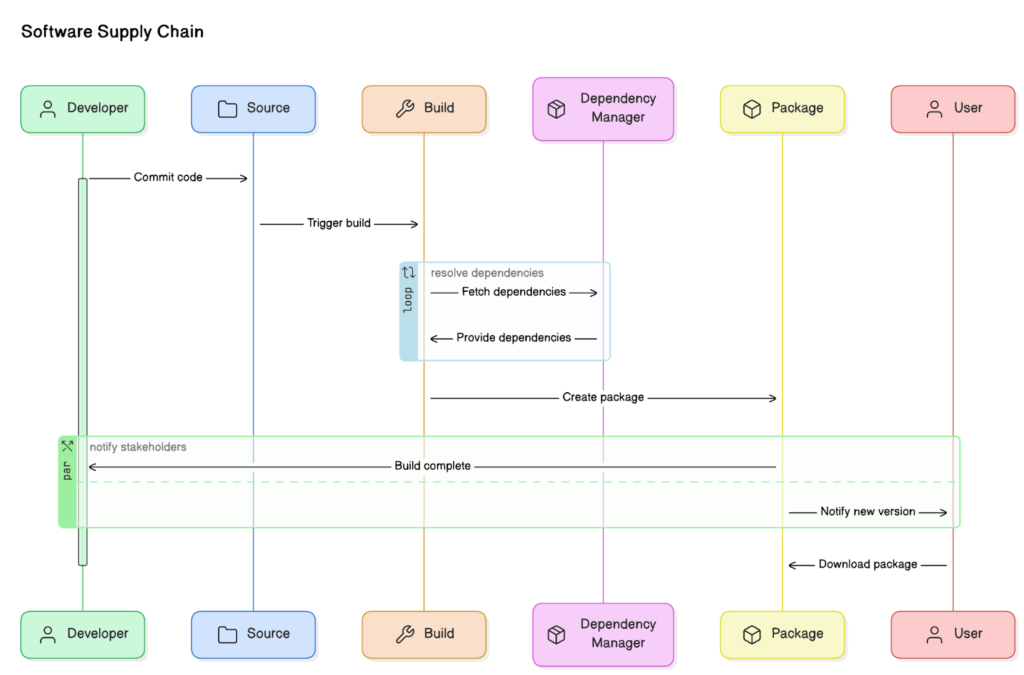
Software supply chains are complex ecosystems where even a single vulnerability can lead to widespread compromise.
Read article

Hassan Khan Yusufzai, Director at Laburity, was recently featured in an interview with SafetyDetectives.
Read articleDon't wait for a breach, secure your cyber space now. You would be talking to an actual cyber security expert.