Healthcare organizations rely on EHRs, patient portals, APIs, cloud infrastructure, medical devices, and legacy systems. A weakness in any one of them can become a pathway to sensitive patient data. Because system downtime can also affect patient care, healthcare security teams need to know not only where vulnerabilities exist, but which weaknesses attackers could actually exploit and chain together.
This blog explores the healthcare attack surface, why downtime can directly affect patient care, and why automated scanning alone may not reveal the full risk. It also looks at current HIPAA Security Rule requirements, proposed changes, and how penetration testing can be safely performed across healthcare systems that cannot simply be taken offline.
1. What the healthcare environment actually exposes
Healthcare organizations rely on patient portals, web applications, and APIs to deliver everyday services such as appointments, messaging, billing, and access to medical information. These systems sit directly in front of sensitive patient records, making authentication, authorization, session management, and business logic important security controls. APIs add another layer of exposure because they connect applications and services such as mobile apps, laboratory systems, and insurers. API penetration testing can identify serious authorization weaknesses, including broken object level authorization, where a change to a request identifier could expose another patient's record.
2. Why downtime changes the risk calculation
Healthcare organizations face a different risk when critical systems become unavailable. Ransomware, for example, can disrupt scheduling, diagnostics, imaging, and other services even when patient records themselves have not been accessed. This means attackers can create significant pressure simply by disrupting operations. A compromised internet-facing service, reused credential, privilege escalation, and weak internal segmentation can combine to create a path from an initial compromise to critical healthcare systems.
3. Where scanning stops and testing continues
A vulnerability assessment helps identify weaknesses such as missing patches, insecure configurations, and exposed services. But finding a vulnerability does not always show whether an attacker can use it to reach something important. Penetration testing goes further by safely testing whether identified weaknesses can be exploited and connected into a realistic attack path. This is particularly valuable for legacy systems, where organizations may need to understand the actual risk before deciding how to protect systems that cannot yet be replaced.
4. What HIPAA requires now and what regulators propose
The HIPAA Security Rule currently requires covered entities and business associates to perform risk analysis and evaluate the effectiveness of their safeguards. It does not currently set a specific requirement or frequency for penetration testing. On December 27, 2024, the Office for Civil Rights issued a notice of proposed rulemaking that would introduce more specific cybersecurity requirements, including vulnerability scanning at least every six months and penetration testing at least once every 12 months. The proposal also addresses areas such as encryption, multi-factor authentication, and network segmentation. HHS states that the existing Security Rule remains in effect while the proposed rule is being considered, so these proposed testing intervals are not current obligations.
5. How testing is scoped without disrupting care
Penetration testing needs to reflect the healthcare environment being assessed. A small provider using a single cloud environment will have different testing requirements from a hospital group operating multiple sites, thousands of devices, and numerous third-party connections. Testing typically focuses on patient-facing and internet-facing systems, identifies exploitable weaknesses, validates findings, and prioritizes remediation based on their potential impact. Medical equipment requires additional care because it may need to remain operational. Testing can therefore focus on network exposure, configuration, and segmentation within agreed rules of engagement and testing windows. Web application and API penetration testing can then help demonstrate whether an exposed application or API provides a path toward more sensitive internal systems.
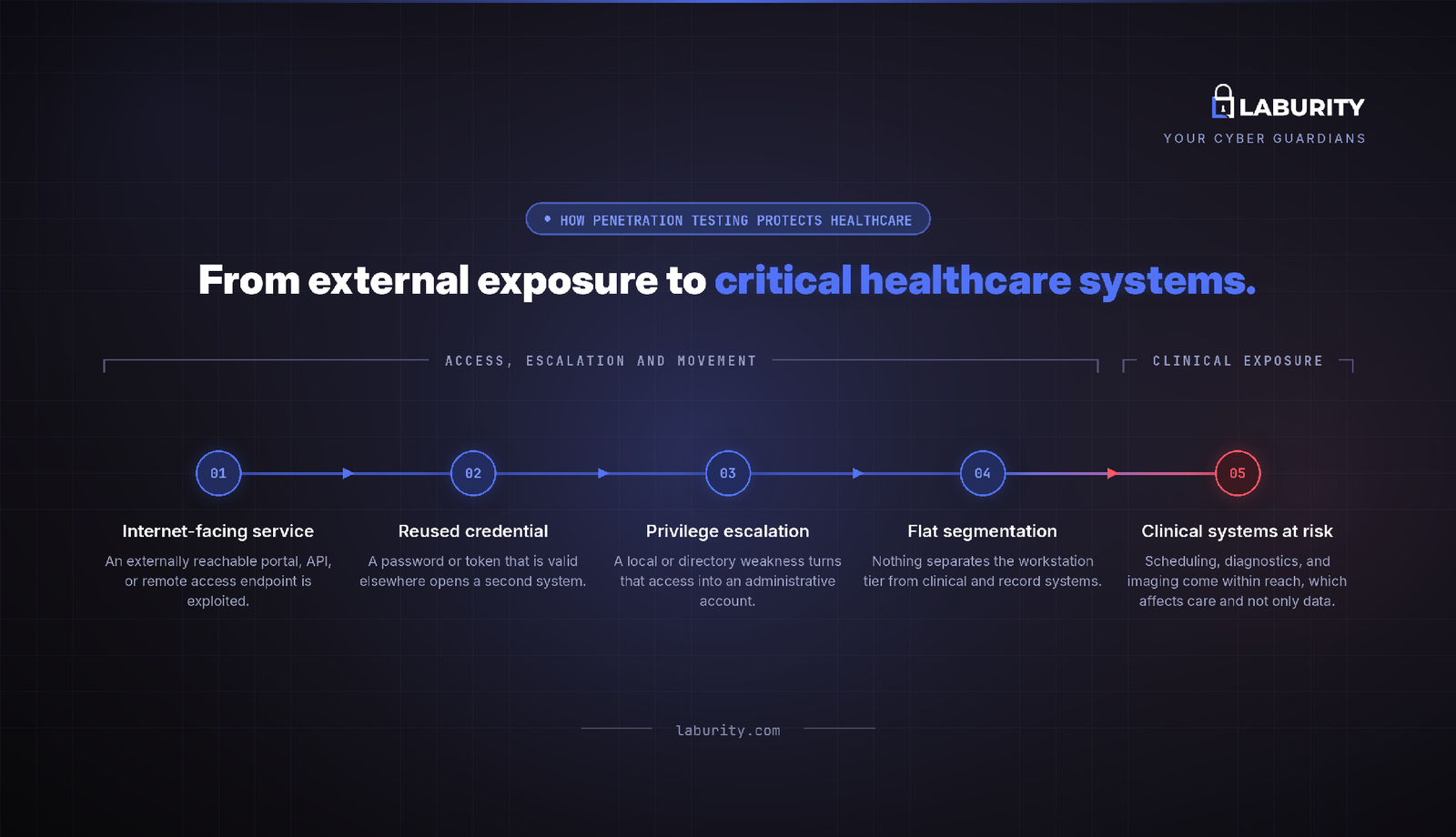
A healthcare organization can control whether it knows which weaknesses an attacker could exploit, in what order, and what that could cost in terms of care delivery.
If you're looking to strengthen your cybersecurity posture or assess your organization's exposure to similar risks, we're here to help. Book a consultation at https://calendly.com/laburity/meeting, reach out to us at [email protected], or learn more about our services at https://laburity.com/.